
Freight Handoffs Get No Respect
Dana Whitlock, Corvane's Chief Product Officer, went on Lights-Out Freight last Friday to talk about cargo security. Somewhere in the middle of it, asked why this part of the industry has never attracted real technology investment, she gave the most accurate description of the handoff anyone has offered in years:
It's the middle child of supply chain solutions, which is it gets no respect.
She is right, and the reason she gave is the part worth sitting with: there is often no clear owner of the connection point between over the road and the warehouse.
That is the whole problem in one sentence.
No respect from the org chart
Ask a shipper who owns the warehouse and you get a name in four seconds. Ask who owns transportation, same. Ask who owns the handoff and you get a pause.
The handoff is the seam. Transportation's metrics stop at the port. The warehouse's metrics start at the receiving door. Nobody's bonus is tied to the hours in between, so nobody fights for it in the budget cycle. It is the orphan asset: everyone's problem when it breaks, nobody's mandate when it works.
Dana made the consequence explicit. Without something effective sitting between over the road and the facility, you are not just leaving productivity on the table inside the building. You are degrading transportation productivity, and you are opening a security exposure at the same time. One unowned seam, three separate bills.
No respect at the customs desk
Here is what Dana described, and what anyone who has walked a port recently will recognize immediately.
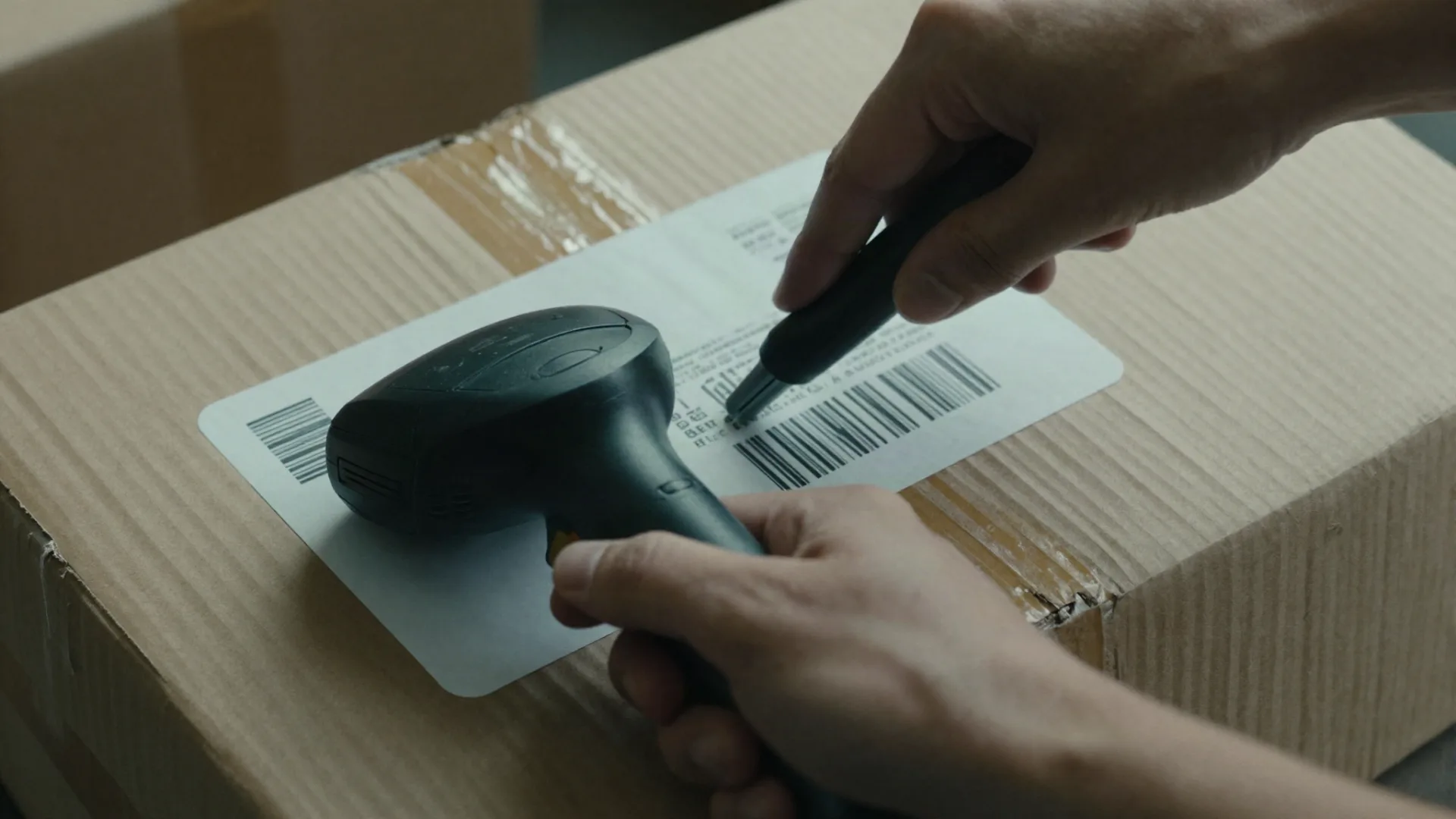
Go out to the clearance office. Whatever the site calls it, broker desk, customs window, release office, the process is the same at the majority of ports Corvane visits: a human being with a clipboard or a spreadsheet, writing down that a driver checked in, that a license was eyeballed, that the driver is here for this load.
Then, separately, there is the system that actually runs the operation.
Two systems. One holds identity. The other holds the cargo. Neither talks to the other. And as Dana put it, there is no reason in 2026 for those to be two different systems.
Priya Natarajan pushed on it from the carrier side and landed on the detail that should bother everyone: even when the release confirms the right carrier and the right driver, are they leaving with the right cargo, in the right container? If the logo on the container matches the logo on the truck and it is going out empty, it goes out. Right container or not.
That is not a technology gap. That is a process running on vibes.
The thieves respect the freight just fine
The one constituency that has correctly assessed the handoff's value is organized cargo crime.
Dana cited the FBI number: more than 60% of cargo theft today is impersonation. The old model was bolt cutters, jump the fence, cut the back of the trailer, throw boxes over. That still happens. It is no longer the main event. The main event is somebody presenting as someone they are not and driving out the front door with the paperwork in order.
Which means the modern theft vector is not a hole in the fence. It is a hole in the data.
Dana named it directly: bad actors see the seams and the lack of digitization, and they build on them. Every point solution you bolt on creates another seam, and the seams are where both inefficiency and attackers live. She called the resulting condition vendor fatigue, and said customers are tired of it.
The handoff's reputation problem and its security problem are not two problems. They are the same problem viewed from different departments.
No respect from the systems of record
This is the sharpest thing Dana said, and it deserves to be pulled out.
Most freight tooling today does not drive the process. It records that a process happened. Somebody does a thing, then updates the system, so that if something goes wrong later, there is a record of it.
Traditional cargo security works the same way, only worse: a load goes missing, so now go pull the footage. What color was the truck. What was on the plate. What was the container ID. What did the driver look like.
Reconstruction after loss, instead of authorization before departure.
Dana's alternative is a digital release pass. The paper release has been standard in this industry forever. Digitize it, and departure becomes an authorization event: this driver, this truck, this container, this load, all verified as belonging together, all cleared to leave as one cargo chain. The record is generated as a byproduct of the operation running correctly, rather than assembled afterward from camera footage and a clipboard.
Worth noting what preceded Dana on that broadcast. The lead story was a $600 million verdict against a large brokerage, and the entire discussion around it turned on documentation: what was written down, what was in the record, what a plaintiff's attorney can put in front of a jury. Dana opened her own segment by connecting freight efficiency back to that, since moving a driver through customs faster protects their hours of service, and hours of service is a safety issue.
Put those two segments together and the argument writes itself. The handoff is the least instrumented node in the network, and it is generating handwritten records, at a moment when the industry is learning in real time what happens when your records are the case against you.
The rest of the middle child joke
Here is why the metaphor is better than it first appears.
The middle child was not actually a nobody. They were often the most adaptable person in the family, the one who negotiated peace, and they held the whole schedule together Caravan, and the people who knew what they were watching considered them the glue. "No respect" was never a description of their talent. It was a description of the gap between their value and their reputation.
Same gap. Same handoff.
The handoff is not a low-value asset that deserves low-value tooling. It is a high-value asset carrying a low-value reputation, and that reputation is a historical artifact of the fact that nobody could see inside it. You cannot respect what you cannot measure. For thirty years, the handoff could not be measured at any price a normal operator would sign off on.
That constraint is gone. Asked what a logistics manager should fix immediately, Dana did not lead with AI or sensors or a platform. She led with digitization. Get off the clipboards. Get out of the spreadsheets. Everything else is hard to layer on until the operation is digital.
Then live tracking, which is now both effective and cost-effective, and, as she was careful to say, not the tracking you remember. Not a security afterthought bolted onto the perimeter, but built into the core of the system that runs the operation.
Freight is too valuable to ignore
The convergence Dana kept returning to is already here on the buyer side. Over 90% of the customers Corvane talks to now ask about security alongside operational efficiency. Not one or the other. Both, in one system, because they finally understand those were never separate questions.
Every load in North America waits at a handoff. The most expensive cargo in the network sits there. The most constrained resource in the network, a driver's clock, burns there. The largest concentration of theft exposure in the network is there. And the operating system for all of it, at most sites, is a whiteboard, a radio, and one spreadsheet on one person's laptop.
The handoff did not get "no respect" because it was unimportant. It got no respect because it was invisible, and invisibility got mistaken for insignificance.
The technology to see it costs a fraction of what it did five years ago. The excuse expired.
The middle child never got the respect. For logistics operations to thrive, the handoff has to.


