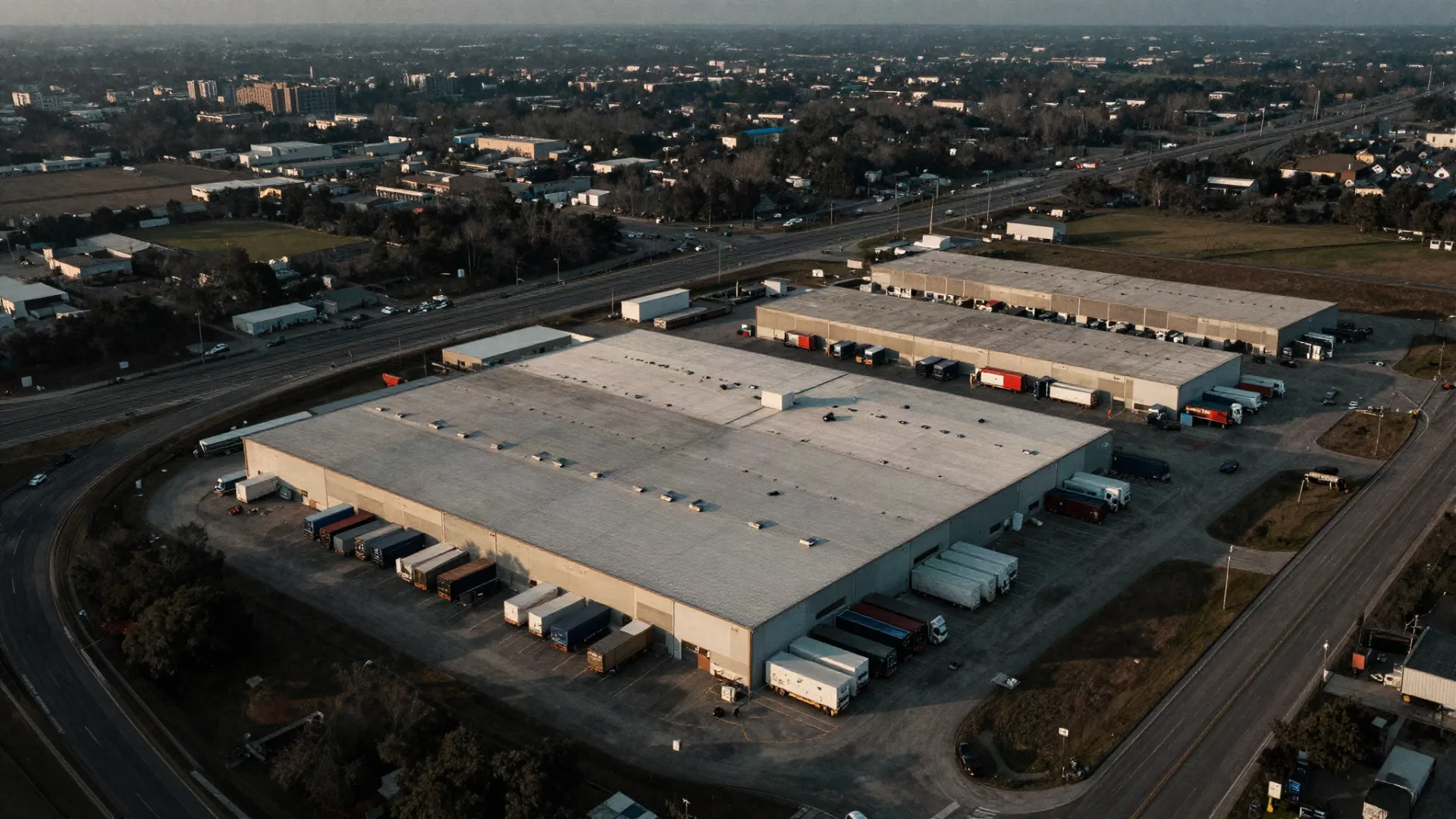

If you manage a high-volume distribution network, you know that the handoff between port and warehouse is where efficiency either thrives or dies. A Freight Control Tower is the software solution that orchestrates everything happening between your port and your warehouse—tracking containers, coordinating moves, managing customs clearance, and ensuring cargo is exactly where it needs to be when it needs to be there.
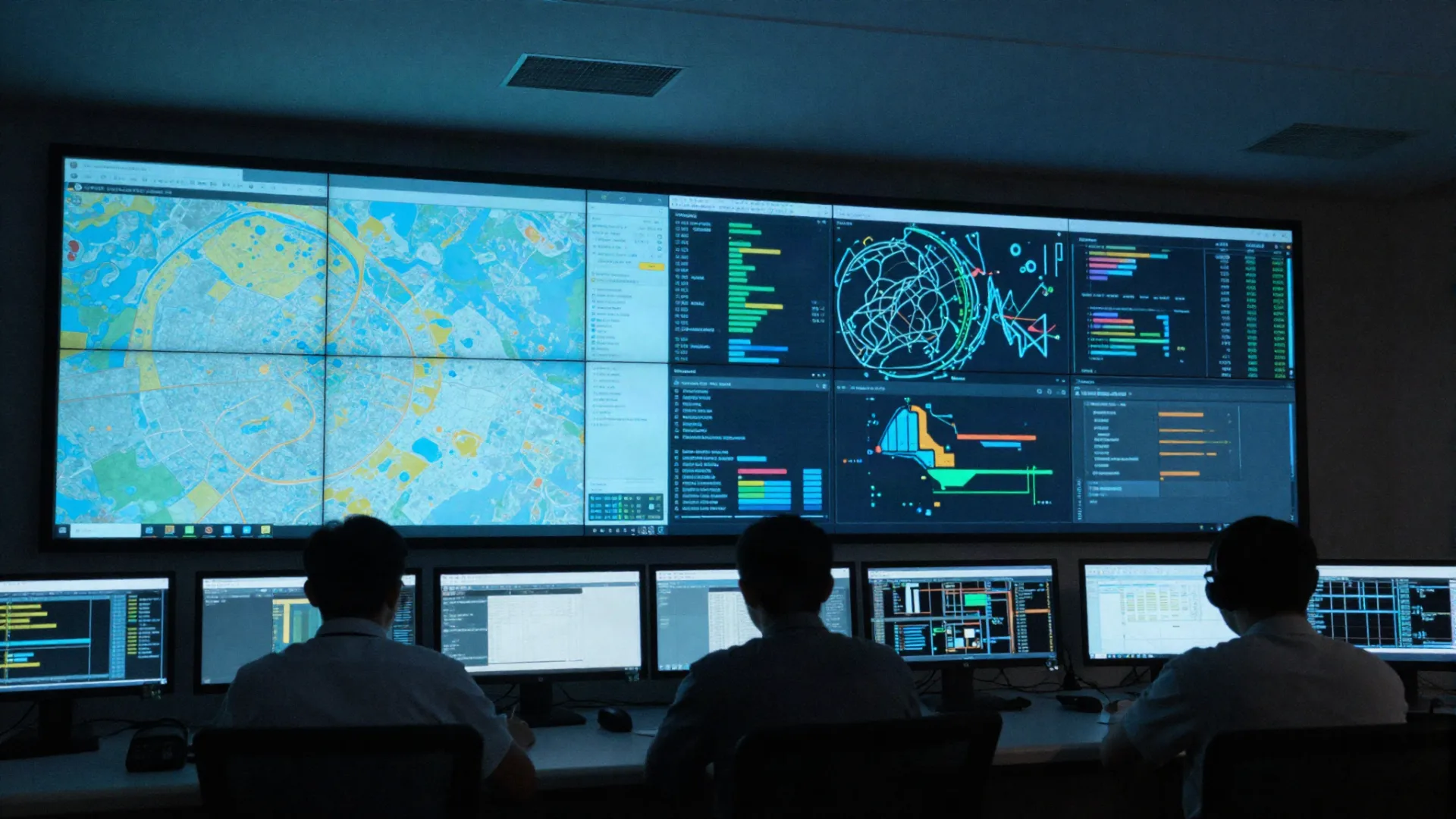
Think of a control tower as the nerve center for your freight operations. It provides real-time visibility into every shipment, every move, and every bottleneck forming on your network. Without this visibility, you're essentially operating blind, relying on manual processes, phone calls, and drivers hunting for containers that may or may not be where the paperwork says they are.
Modern freight control towers go far beyond basic tracking. They leverage AI-powered live tracking, automated workflows, and real-time data infrastructure to eliminate the manual touchpoints that slow down your operations. These systems don't just tell you where your cargo is—they actively prevent the congestion, delays, and inefficiencies that plague traditional freight operations.
In this article, we'll explore how a modern control tower can help reduce bottlenecks in high-volume distribution centers, leading to measurable improvements in throughput, cost savings, and operational efficiency. You'll see exactly how the right technology transforms freight chaos into coordinated precision.
Understanding Bottlenecks in High-Volume Distribution Centers
High-volume distribution centers face persistent challenges that directly impact their ability to move goods efficiently. You'll find these freight bottlenecks manifest in three primary areas that create cascading delays throughout your operations.
1. Customs Congestion
Customs congestion stands as one of the most visible problems. When trucks queue at entry points waiting for manual entries, paperwork verification, and security clearances, you're watching valuable time and resources drain away. Each delayed truck at customs creates a ripple effect that extends into your freight operations and pickup scheduling.
2. Truck Idling
Truck idling represents another critical bottleneck. Drivers arrive at your facility only to sit in their cabs, engines running, waiting for warehouse assignments or delivery instructions. This idle time doesn't just waste fuel—it creates frustration for drivers who face tight delivery windows and contributes to unnecessary emissions across your network.
3. Container Congestion
Container congestion compounds these issues when you lack real-time visibility into cargo locations. Your dispatch personnel spend hours searching for specific containers in sprawling ports, moving equipment multiple times to access the right cargo, and dealing with misplaced or "lost" containers that disrupt planned operations.
These logistics inefficiencies carry substantial financial consequences:
Demurrage fees accumulate rapidly when trucks remain on-site beyond contracted free time, often costing $50-$100 per hour per vehicle
Fuel consumption from idling trucks adds unnecessary operational expenses while increasing your carbon footprint
Reduced throughput limits the number of loads you can process daily, constraining your capacity during peak seasons
Labor costs escalate as dispatch personnel spend excessive time on manual tracking, paperwork processing, and cargo searches
Customer satisfaction deteriorates when shipments miss delivery windows due to freight delays
The compounding nature of these bottlenecks means a single inefficiency in your customs operations can cascade into warehouse delays, missed bookings, and ultimately, dissatisfied customers. You're not just dealing with isolated problems—you're managing an interconnected system where each bottleneck amplifies the impact of others.
How a Modern Control Tower Helps Solve Bottlenecks
A modern Freight Control Tower changes the way distribution networks deal with operational problems that cause bottlenecks. The benefits go beyond just tracking cargo—these systems provide the necessary infrastructure to coordinate complex freight operations accurately.
1. Automation in Freight Forwarding: Starting at Booking
Automation in freight forwarding begins at the booking. Advanced control tower solutions remove manual entry processes that typically slow down operations. Now, you can handle incoming and outgoing trucks through automated workflows that:
Capture container IDs
Verify bookings
Assign warehouse bays
All of this happens without any human involvement. As a result, your customs personnel can spend less time on paperwork and more time managing exceptions that truly need human judgment.
2. Real-Time Visibility: Knowing What's Happening on Your Network
The main feature that sets modern systems apart is their ability to provide real-time visibility across every shipment on your network. With this capability, you can:
Know exactly where each container is located
Understand what it contains
Determine when it needs to move
This level of transparency eliminates the time-consuming searches that are common in traditional freight operations. Instead of relying on outdated information from a whiteboard or spreadsheet, your drivers receive automated task assignments based on actual freight conditions.
3. Addressing Bottlenecks Before They Worsen: Dynamic Operations
Real-time tracking of containers and cargo creates a flexible operational environment where bottlenecks can be addressed before they escalate. When a container arrives, the system automatically:
Validates the shipment against expected arrivals
Assigns an optimal storage location based on load attributes
Queues the cargo for warehouse assignment when space becomes available
Notifies relevant personnel of any exceptions requiring attention
4. Intelligent Warehouse Bay Assignments: Minimizing Delays
Warehouse bay assignments become intelligent rather than arbitrary with the help of your control tower. It analyzes factors such as:
Container contents
Destination requirements
Current warehouse utilization
By considering these factors, your control tower can optimize assignments and minimize delays caused by poor positioning decisions that lead to unnecessary container movements later in the process.
The shift from reactive to proactive freight management is the main value proposition of modern control tower technology.
Key Features of Advanced Control Towers That Drive Efficiency
An AI-native control tower transforms freight operations through intelligent automation that goes far beyond basic tracking. The integration of live tracking technology with artificial intelligence creates a foundation for unprecedented operational accuracy and speed.
1. Live Tracking for Cargo
Modern systems leverage live tracking technology to achieve 99.5% data accuracy in cargo identification and tracking. This level of precision eliminates the guesswork that plagues traditional freight operations. You no longer need manual scans or GPS devices attached to every container. The system automatically captures and processes tracking data, identifying cargo as it moves through your network. This continuous monitoring creates a live, sensor-driven map of your entire operation, showing you exactly where every container sits at any given moment.
2. Automated Customs Operations
Smart workflows powered by AI and live tracking revolutionize customs processing. These automated customs processes deliver throughput improvements exceeding 50% by eliminating manual paperwork and reducing transaction times by up to 85%. The system recognizes arriving trucks, validates credentials, and processes entries without human intervention. You'll see customs congestion disappear as vehicles flow through entry and exit points with minimal delays.
3. Advanced Operational Intelligence
Beyond basic tracking, advanced freight control towers incorporate specialized features that address critical operational challenges:
Damage Detection: AI-powered visual inspection identifies container damage automatically during pickup and delivery, preventing disputes and ensuring accurate condition documentation
ISR Compliance Monitoring: Automated verification of International Safety and Regulatory standards keeps your operation compliant without adding manual inspection steps
Security Enhancements: Configurable blacklist engines and unauthorized pickup detection protect against cargo theft and security breaches
These capabilities work together to create a comprehensive system that doesn't just track cargo—it actively manages risk, ensures compliance, and protects your operation from costly incidents.
Enhancing Communication and Coordination Through Automation
Manual paperwork creates friction at every touchpoint in freight operations. You've likely experienced the cascade of delays when a driver arrives with incomplete documentation, or when dispatch personnel spend precious minutes tracking down cargo information through phone calls and emails. Automated communication platforms eliminate these pain points by creating digital channels that connect drivers, dispatchers, and warehouse operators in real-time.
Streamlining Communication with Digital Solutions
Digital communication systems replace clipboard-based processes with mobile-enabled workflows. When a driver verifies pickup through an automated system, the information flows instantly to dispatchers who can assign warehouse bays and coordinate moves without manual data entry. The Corvane Driver mobile solution exemplifies this approach—drivers receive pickup tasks directly on their devices, update completion status in real-time, and maintain continuous visibility into their queue of assignments.
Improving Coordination Between Drivers and Dispatchers
Driver-dispatch coordination becomes seamless when automation handles the routine information exchange. You no longer need dedicated personnel stationed at checkpoints to manually log truck arrivals or phone in warehouse assignments. The system automatically triggers approvals based on configurable rules, validates expected arrivals against shipment data, and processes unanticipated pickups through predefined workflows.
Optimizing Labor Efficiency Through Automation
Labor optimization reaches new levels when you reduce dependency on manual processes. High-volume distribution networks that previously required multiple customs clerks can redirect that workforce to value-added activities. Human error diminishes significantly—no more misread container numbers, incorrect bay assignments, or lost paperwork. The system captures accurate data at every step, from automated pickup timestamps to planned activity data, creating an auditable trail that supports both operational efficiency and compliance requirements.
Integration with Broader Supply Chain Systems for Holistic Operations
A modern Freight Control Tower doesn't operate in isolation—its true power emerges when you connect it with your existing supply chain infrastructure. WMS integration transforms how your freight and warehouse communicate, eliminating the data silos that create confusion and delays.
How WMS Integration Works
When your control tower talks directly to your Warehouse Management System:
Warehouse bay assignments happen automatically based on real-time inventory needs and available space.
You get instant visibility into which containers hold priority shipments.
Your team can stage them strategically for faster unloading.
TMS connectivity extends this visibility upstream and downstream. Your Transportation Management System feeds arrival predictions and carrier information directly into the control tower, enabling proactive customs preparation and resource allocation.
Benefits of TMS Connectivity
When a carrier's ETA changes:
Your control tower automatically adjusts warehouse schedules.
Labor assignments are modified accordingly.
This bidirectional data flow means your transportation planners can see actual warehouse capacity and container availability, making more informed routing and scheduling decisions.
The result is genuine supply chain visibility that spans from carrier pickup to warehouse putaway. You create a unified data ecosystem where every stakeholder accesses the same real-time information.
Corvane Cargo's Control Tower exemplifies this approach through seamless integration capabilities that connect freight operations with existing enterprise systems. The platform's cloud-native architecture ensures data flows freely between systems without complex middleware or custom coding.
Managing Multiple Freight Networks
This integration becomes particularly valuable when you're managing multiple freight networks. A single-pane-of-glass dashboard provides comprehensive oversight across all locations, standardizing processes while accommodating site-specific requirements.
With this integrated system, you can:
Track containers moving between facilities.
Optimize network-wide capacity utilization.
Identify systemic bottlenecks that wouldn't be visible in isolated lane views.
Technology Enablers Behind Modern Control Tower Solutions
The infrastructure behind modern freight control towers relies on advanced technologies that work together to provide real-time visibility and automation. These technologies are changing the way distribution networks track, manage, and improve their freight operations.
1. GPS Tracking: More Than Just Location Monitoring
GPS tracking has come a long way from simply knowing where something is. Today's control tower platforms use GPS data to continuously track cargo across the network, creating a live map of container locations. This technology eliminates the need for drivers to spend hours searching for containers manually. With GPS, you can instantly know the exact location of every shipment, making it quicker to retrieve them and reducing idle time.
2. RFID Technology: Adding Another Layer of Identification
RFID technology works hand in hand with GPS by providing additional identification capabilities at key points in the network. RFID tags attached to containers enable automated recognition as cargo moves through ports and across different areas of the warehouse. By combining GPS and RFID, you create a system that verifies data accuracy even in difficult weather conditions or busy traffic situations.
3. Geofencing: Automating Workflows with Virtual Boundaries
Geofencing allows you to set up virtual boundaries along your routes that trigger automated actions. When a container crosses a geofenced area, the system automatically updates its status, notifies relevant personnel, and starts the next step in your operations. This automation is especially useful during busy times when manual check-in processes can cause delays. You can set up geofences around ports, warehouses, and staging areas to capture movement data without needing human involvement.
4. Cloud Scalability: Seamless Integration Across Locations
The cloud scalability of modern platforms ensures that these technologies work smoothly across individual sites or entire freight networks. Corvane Cargo's Control-Tower-in-a-Sensor hardware kit shows how AI-powered live tracking can be set up quickly without extensive digging, using cloud infrastructure to process data and provide insights across multiple locations at the same time.
Operational Improvements from Modern Control Tower Deployment
With the implementation of a modern Freight Control Tower, such as Corvane Control Tower, significant operational improvements can be achieved. These improvements are driven by real-time analytics, AI-powered live tracking, and automated processes that enhance efficiency and effectiveness in freight operations.
1. Real-Time Analytics for Immediate Problem Solving
One of the key advantages of a modern control tower is its ability to provide real-time data on various aspects of freight operations. This includes information on container movements, warehouse utilization, and driver wait times. By having access to live data streams, freight managers can quickly identify inefficiencies as they happen and take proactive measures to address them.
Example: If the system detects that containers are consistently taking longer than expected to be processed at a particular warehouse, the freight manager can investigate the issue and implement solutions such as optimizing loading/unloading procedures or reallocating resources.
2. Data-Driven Decision Making
Traditional methods of managing freight operations often rely on outdated spreadsheets or manual logs, which may not provide an accurate picture of the current situation. With a modern control tower, decisions are based on reliable information obtained from AI-powered live tracking technology, enabling data-driven decision making.
Benefit: This ensures that decisions regarding warehouse bay assignments and staging locations are made with precision, leading to faster movement of containers through the network.
3. Improved Cargo Management
Dispatchers play a crucial role in locating and moving containers across the network. However, if they spend excessive time searching for specific cargo, it can lead to delays and increased fuel consumption. The Cargo Movement application offered by Corvane addresses this issue by significantly reducing cargo search time.
Result: Dispatchers can now locate containers more efficiently, resulting in reduced driving around and lower fuel consumption.
4. Streamlined Pickup Processes
Driver wait times at pickup and delivery points can impact overall operational efficiency. By implementing automated pickup processes through the control tower, transaction times can be significantly reduced.
Impact: This means that drivers spend less time idling at pickups, leading to improved productivity and better utilization of resources.
5. Enhanced Throughput
Throughput refers to the number of trucks processed within a specific timeframe. With AI-powered workflows orchestrating freight activities, Corvane customers have experienced significant improvements in throughput.
Outcome: By eliminating manual coordination bottlenecks, more trucks can be processed per hour without requiring additional staff or expanding physical space.
6. Environmental Sustainability
The operational improvements brought about by a modern control tower also have positive implications for the environment. Lower fuel consumption resulting from reduced idling and optimized movements contributes to a decrease in carbon footprint—a concept explored in detail in this article about proactive strategies for climate impact.
Benefit: This aligns with sustainability goals while simultaneously improving profitability—a combination that strengthens competitive positioning in the market.
Financial and Customer Service Benefits of Using a Modern Control Tower
The financial impact of implementing a modern Freight Control Tower extends far beyond operational metrics.
1. Reduction in Demurrage Fees
Demurrage fee reduction represents one of the most immediate cost savings you'll experience. When your freight operates with real-time visibility and intelligent scheduling, drivers spend significantly less time waiting for warehouse assignments or searching for containers. Corvane's Advanced Network capabilities have demonstrated a 12% reduction in demurrage fees by eliminating the guesswork from freight operations. You know exactly where every container sits, which means drivers can hook and go without the costly delays that trigger penalty charges.
2. Automated Invoicing for Accurate Billing
Automated invoicing transforms how you handle billing accuracy and contractual compliance. Manual paperwork creates opportunities for disputes over arrival times, departure timestamps, and service level agreements. A modern control tower captures every customs transaction, bay assignment, and transit time automatically. You maintain an irrefutable digital record of all freight activities, which means billing disputes decrease dramatically. The system generates accurate invoices based on actual timestamps and events, ensuring you charge correctly for services rendered while avoiding costly chargebacks from customers who question manual entries.
3. Improved Customer Satisfaction
Customer satisfaction improves when you can guarantee consistent, predictable service. Your customers care about one thing: their freight moving on schedule. With comprehensive shipment visibility, you can provide accurate ETAs and proactively communicate any potential delays. The 50%+ throughput improvement enabled by AI-powered workflows means shipments move through your network faster. You're not just meeting delivery windows—you're exceeding them. This reliability translates directly into stronger customer relationships, contract renewals, and competitive advantages in markets where service quality differentiates winners from everyone else.
Scaling Freight Operations with Networked Control Towers
Managing multiple distribution centers in different regions comes with its own set of challenges. Each lane has its own way of doing things, relationships with carriers, and operational limitations. However, a modern control tower designed for scalability across freight networks can turn this complexity into a strategic advantage.
1. Centralized Control
When you implement a single platform throughout your entire distribution network, you achieve true centralised control. Corvane Control Tower offers dashboards that provide an overview of all locations in one place. This allows you to simultaneously monitor customs activity in Atlanta, assess warehouse usage in Chicago, and track container transit times in Dallas—all from a single interface.
2. Multi-Site Visibility
The elimination of information silos that often hinder multi-lane operations is made possible by this enhanced visibility across multiple sites. With this system in place, you gain immediate access to:
Real-time cargo locations throughout your entire network
Performance metrics comparisons between different facilities
Capacity utilization data spanning the entire network
Movement patterns and optimization opportunities across various sites
3. Resilience Factor
The ability to bounce back quickly when unexpected disruptions occur is crucial. In such situations, you can swiftly redirect shipments to alternate facilities if weather conditions force a port closure or if a sudden increase in demand overwhelms a particular location. The system's comprehensive view of the network enables you to dynamically adjust workloads by reallocating resources to areas where they are most needed.
4. Standardization with Flexibility
Achieving consistency across lanes doesn't mean sacrificing flexibility. While maintaining uniform operational protocols, you can still accommodate specific requirements at each site through customizable workflows. This ensures that your team members can seamlessly transition between different facilities without having to relearn various systems, resulting in reduced training costs and improved operational continuity.
5. Scalability Beyond New Lanes
The ability to scale goes beyond just adding new lanes to your network. It also includes expanding capacity within existing facilities, smoothly integrating acquisitions, and adapting to seasonal fluctuations in volume without being restricted by system limitations that could hinder your growth plans.
Conclusion
The evidence is clear: modern freight control towers are transforming how high-volume distribution centers eliminate bottlenecks and optimize operations. Through AI-powered automation, real-time visibility, and intelligent orchestration, solutions like Corvane Control Tower demonstrate that achieving 50%+ throughput improvements and 85% faster customs processing isn't just possible—it's becoming the new standard.
You face mounting pressure to reduce demurrage fees, accelerate container turnaround times, and scale operations without proportionally increasing costs. Traditional manual processes simply can't keep pace with the demands of modern supply chains. The technology exists today to digitize, automate, and optimize every aspect of your freight operations, from port to warehouse.
The question isn't whether to adopt advanced freight solutions—it's how quickly you can implement them. With rapid ROI timelines under five months and minimal disruption to existing operations, the path to sustainable growth in high-volume distribution centers starts with embracing data-driven freight management. Your competitive advantage depends on it.